
Created by EPSO-EU
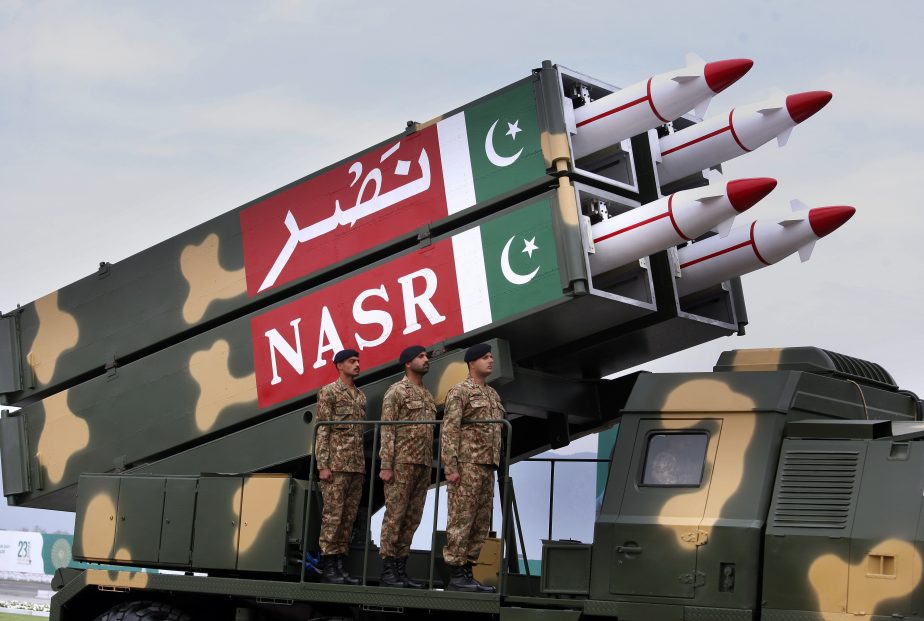
Beyond the potential influence that Pakistan’s missile program may have on the Indo-Asian region, the main source of instability in the area is the frequent tension with India and, in recent years, Israel. In this context, the development of the missile program is a distinguishing factor in the threat to this instability.
Both Pakistan and India have developed missile programs primarily for deterrence against potential aggression from the enemy. While it’s true that Pakistan’s missile program is more limited, it’s sufficient to reach any target within Indian territory, as can be seen in the following image.
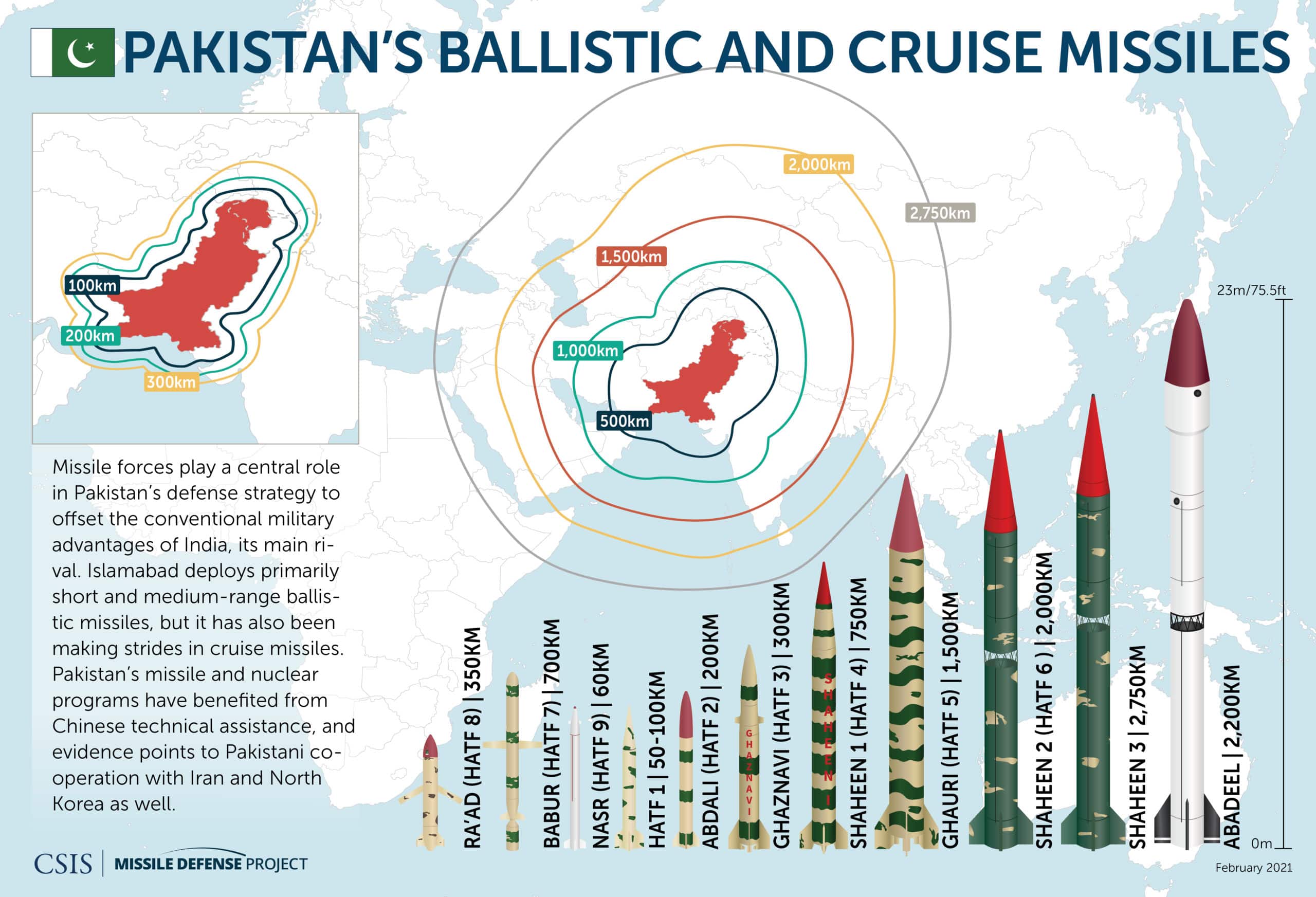
Pakistan is not integrated into the international aerospace trade network, which poses a handicap when it comes to acquiring materials and significant technological advancements. This is the main reason why Pakistan’s missile models depend on technology transfer from China and North Korea. The rivalry between these countries and the United States damages Pakistan’s image in the West.
Furthermore, Pakistan’s doctrine regarding the use of nuclear weapons includes the possibility of a preemptive strike that could cause irreparable damage to both military and civilian targets. As a result, for a significant number of Western countries, Pakistan represents a greater threat than India.
The development of these programs represents a genuine arms race between the two powers. Likewise, the constant missile tests conducted by both countries are not free from errors, which can result in these missiles impacting enemy territory. In fact, the latest crisis between the two countries was due to the test launch of a missile in India that mistakenly impacted Pakistani territory.
Without delving into the debate on the importance of both countries possessing and continuing to develop nuclear weapons, the arms race involving increasingly sophisticated and longer-range delivery systems poses the primary threat to the security of the region. Pakistan continues to develop more missiles, more anti-missile defense systems, and is even beginning to engage in the space race.
There is no willingness for negotiation from either side to begin a well-ordered de-escalation, making it particularly necessary to establish an international policy that leads to negotiation and prevents the international powers from taking sides. Furthermore, this lack of willingness for negotiation is intensified by the impunity with which Pakistan and India have acted, and the technological, strategic, and economic benefits that the arms race has bestowed upon them.
On the other hand, Pakistan has also increased its threats against Israel. There are no diplomatic relations between the two parties due to Pakistan’s official stance in support of Palestine in its conflict with Tel Aviv. This support stems from Pakistanis viewing the conflict between Palestine, whose population is predominantly Muslim, and Israel as very similar to the one they experience in the Kashmir region. Therefore, Pakistan continuously calls for the establishment of a viable and independent state for Palestine. In 2021, following an Israeli airstrike on Gaza, Pakistani authorities condemned «the indiscriminate use of force against defenseless Palestinians that violates all humanitarian nor furthermore.
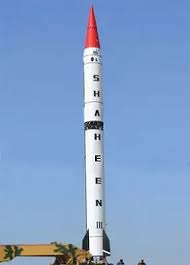
Israels perceives the development of the ShaheenIII missile -Pakistan’s longest-range missile- as a threat. The range of this missile would exceed the maximum distance to India, making it ineffective for targeting Indian objectives. This suggests that the interest in developing the Shaheen III could lie in reaching more distant targets, in this case, Israel itself. At the same time, this missile incorporates a countermeasure system, the purpose of which may be to overcome defense systems like Isarel’s «Iron Dome».
In this context, tension has continued to escalate to the point where Pakistan has threatened Israel with a nuclear attack. This was prompted by a news report – later debunked – in which Israel purportedly declared that it would attack Pakistan if the latter sent troops to Syria.
In conclusion, while Pakistan’s missile program aims to bolster its security, it does not guarantee peace and prosperity in the region. On the contrary, its continuous development increases the possibility of a conflict with unpredictable consequences erupting at any time.
No responses yet